

Strix's business hinges on one precise moment: when someone installs the device in their car. The challenge was making sure lead volume actually converted at that point.
The Challenge
Strix is the evolution of LoJack in Argentina: a subscription-based vehicle security service with real-time location, safe zones, and theft recovery, built around one core product, Strix Auto. Doubling Strix Auto installations in a single year first required fixing the measurement foundation: lead-to-installation conversion stood at 17% in the second half of 2024, with invalid leads reaching as high as 54%.
That meant working on several fronts at once:
- Unify three ad accounts that had no distinct objective for each
- Separate conversion events and adjust attribution windows, which ranged from 1 to 90 days
- Add campaigns differentiated by funnel stage
- Refresh creatives that had been running for 100+ days with no rotation
- Connect CRM conversions to the media platforms
Fixing that foundation was the prerequisite for scaling investment efficiently.
Nobody wants a GPS; they want to stay in control.
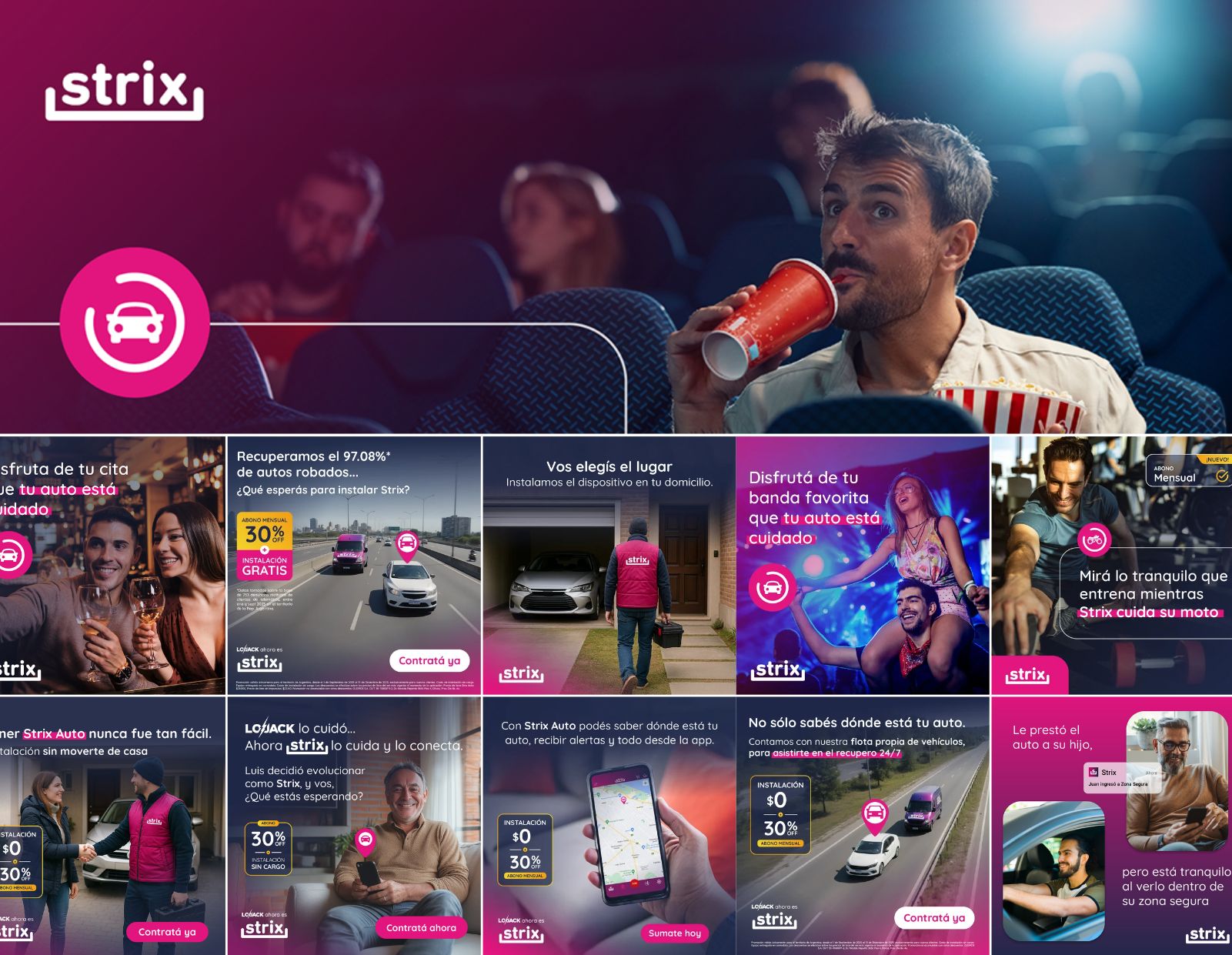
The diagnosis also revealed that people recognized LoJack but didn't understand what Strix actually did. And the messaging kept focusing on the technology (GPS, tracking, telemetry) while people were thinking about something simpler: knowing the car is okay, that the family made it home, that a theft won't ruin their day. That insight reshaped the strategy: stop explaining the product and start showing the moment where it solves something real.
The Strategy: Get Organized Before Scaling
The decision was unusual: slow down investment until that foundation was fixed. With the accounts unified, the customer journey was differentiated by audience motivation:
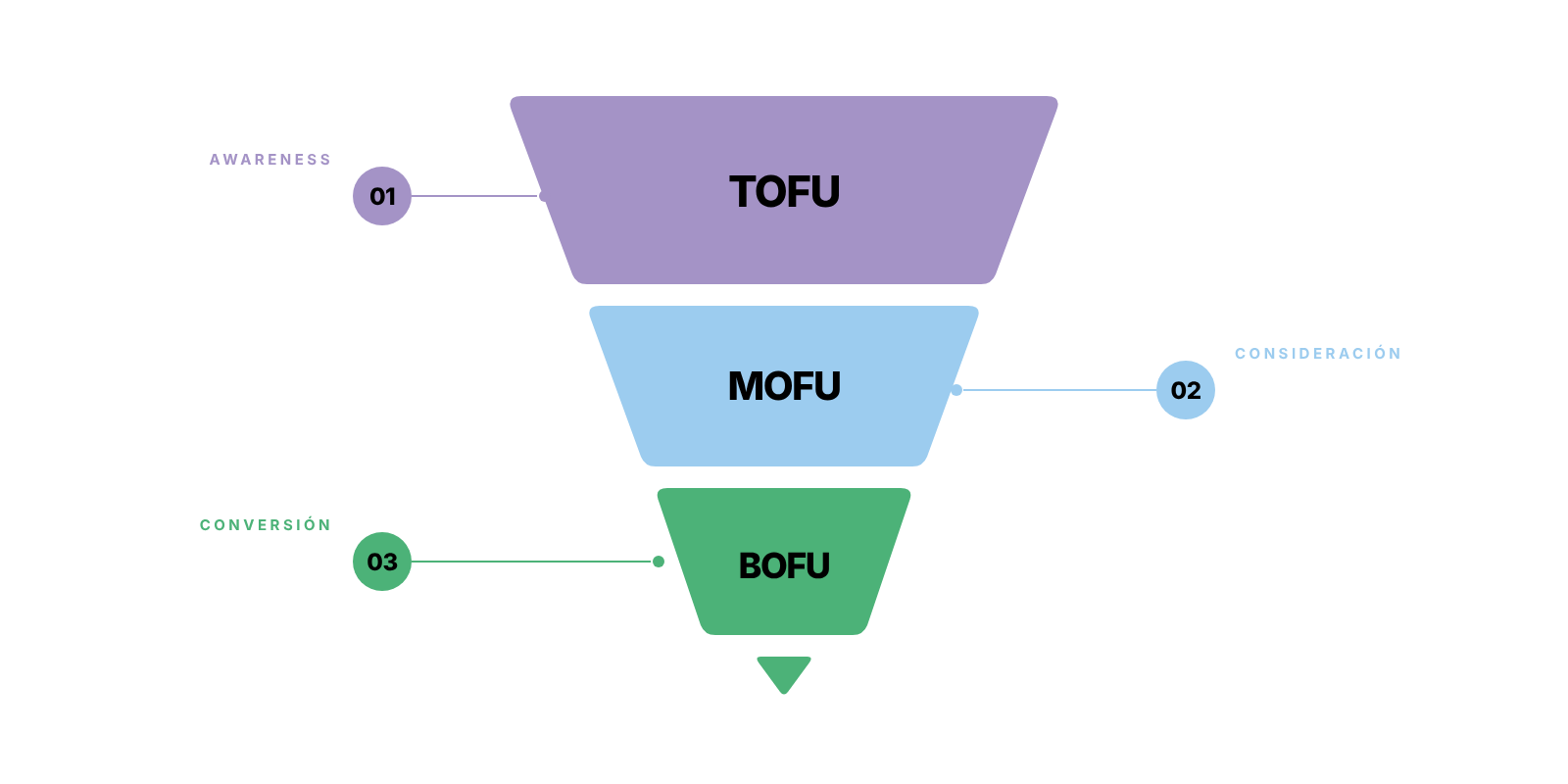
2. MOFU - Consideration: Content explaining the product
3. BOFU - Conversion: A direct offer with a clear CTA
A full-funnel system
Each platform played a distinct role across the customer journey:
- Meta: Reach and consideration across the different stages of the journey
- Search + Performance Max: Capturing active demand, with brand and generic searches kept separate
- Demand Gen + programmatic: Discovery and building new audiences
- Remarketing: Continuing the conversation with users who are already qualified
And safeguards were added to clean up leads before they reached the sales team:
- Double phone number verification on forms
- Exclusion of low-quality placements
- A mystery shopper who audited the entire sales process
The Results
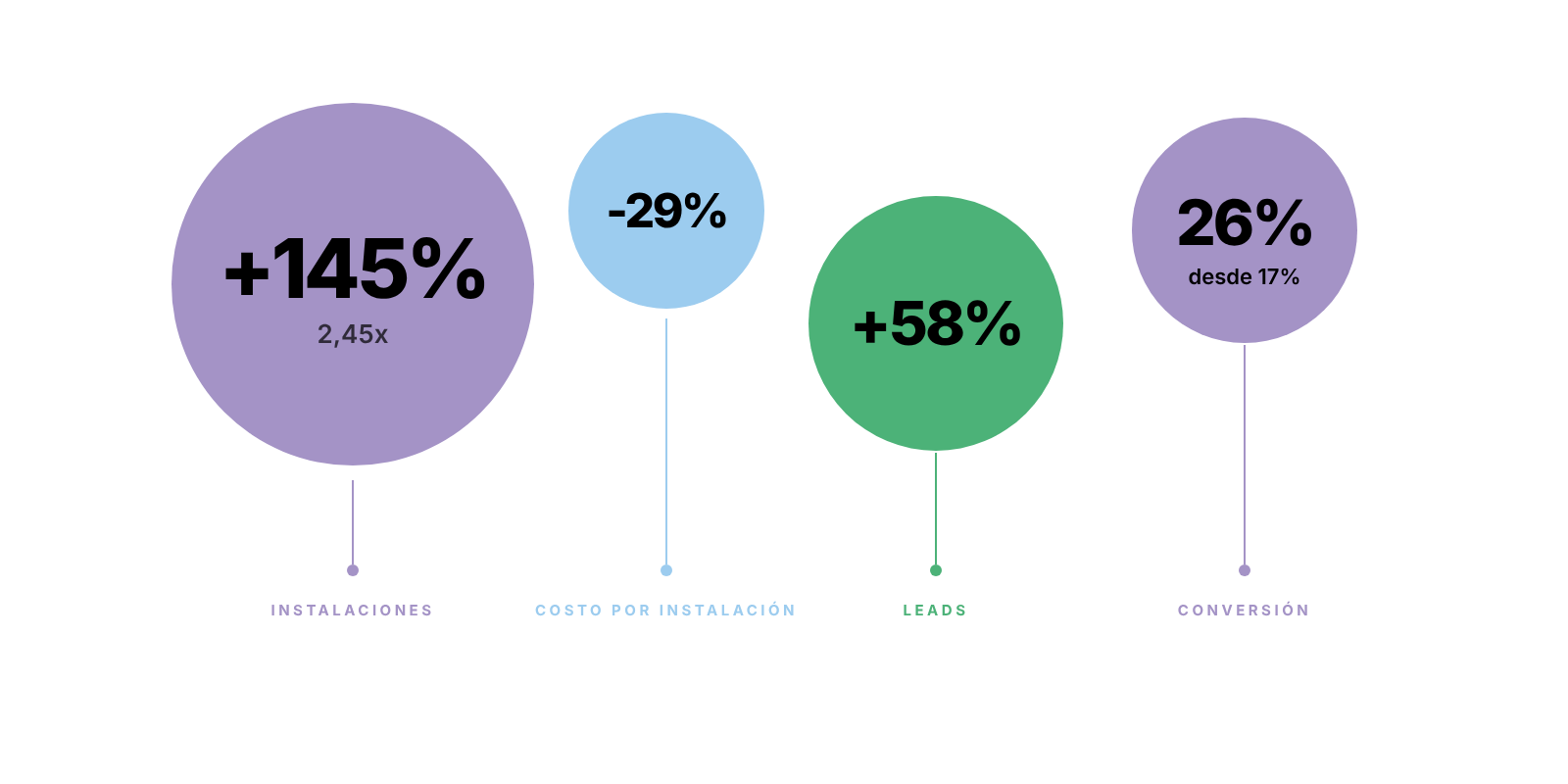
Cost per installation: −29%, from USD 28 to USD 20
Leads: +58%, with the invalid lead rate dropping from 51% to 44%
Lead-to-installation conversion: 17% → 26%
Investment grew 74%, less than half the pace of installations.
The traction generated in the business let us evolve the operation: we optimized processes, incorporated AI to boost efficiency, and freed up time to focus on new growth opportunities.
The Agentic Layer: AI in Service of Judgment
Running a full-funnel process means reading many sources at once: media, analytics, search, and CRM. After the results achieved in 2025, the challenge was sustaining that efficiency in 2026. To do that, the team used Winclap's tech stack, which centralizes data and uses AI agents to run cross-channel analyses, spot opportunities, and apply optimizations continuously.
That made it possible to see relationships between channels that conventional attribution didn't capture, and to act on them faster. AI gave the team its time back to spend on strategy instead of consolidating reports. It didn't replace the team's judgment.
Key Takeaways
Behind the growth is a single lever: capturing a larger share of every peso invested through installation. That required two things: a well-built business system and analytical capacity that moves at the pace of the business.
The priming finding reflects an urgency-driven category, with a short window of intent. In categories with longer cycles, the mechanism may take longer to show up, but the logic doesn't change: the sooner the relationship between channels is read, the sooner you can act on it.
The growth from the funnel strategy opened the door to an agentic approach to reading the data and laid the groundwork for a more ambitious, more competitive 2026.